General Health & Physical Fitness
Retirement: A Social Reward or a Biological Risk?
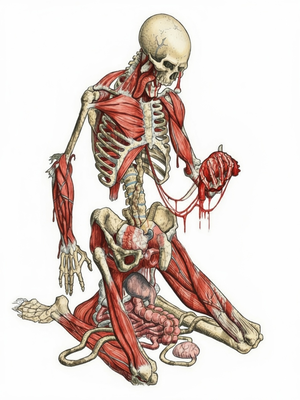
By: Qawamy Team (Based on Harvard Medical Research)
The human body does not simply age upon reaching sixty;...
The human body does not simply age upon reaching sixty;...
By: Qawamy Team (Based on Harvard Medical Research)
The human body does not simply age upon reaching sixty; scientific evidence confirms that we age when we stop growing and moving. In a landmark study published in the Journal of the American Medical Association (JAMA), Dr. Walter Bortz introduced the concept of ( Disuse Syndrome.) This refers to the biological toll the body pays when transitioning abruptly from an active lifestyle to sedentary confinement.
The Biological (Shut-Off) Signal
When physical effort ceases, the nervous system sends a (shut-off) signal to various vital functions. The rapid decline often observed in retirees is not an inevitable consequence of (years,) but rather a physiological response to a lack of movement.
Reports from the Harvard T.H. Chan School of Public Health reinforce this premise. Longitudinal studies indicate that the risk of heart attacks and strokes increases significantly during the first year of retirement, particularly if the lifestyle shift is drastic and sedentary.
What Happens Inside a Resting Body?
According to research in biomechanics and exercise physiology, the body begins to retreat on multiple fronts once the stimulus of movement is removed:
Musculoskeletal System: Muscle mass diminishes (Sarcopenia) and bone density drops due to accelerated calcium loss—a finding supported by Mayo Clinic research on the physiology of inactivity.
Neuroplasticity: The brain loses its adaptability. The absence of daily challenges and social interaction accelerates cognitive decline, as highlighted in studies by The Lancet Healthy Longevity.
Joints and Vital Fluids: The production of synovial fluid decreases, leading to joint stiffness and loss of cartilage elasticity.
Internal Systems: Lung capacity shrinks and metabolism slows down, triggering hormonal and digestive changes that increase the susceptibility to chronic diseases.
Conclusion and Guidance:
Retirement is a well-deserved social achievement, but biologically, it represents a (survival challenge.) If you have a family member entering this stage, the most precious gift you can offer is not an (invitation to absolute rest,) but rather an (invitation to an active life.)
Always remember: Movement is the fuel that keeps the flame of life burning. Do not let it fade away.
Integrated Scientific References:
Bortz, W. M. (Disuse and aging.) JAMA (1982).
Harvard Health Publishing: Transition to retirement and cardiovascular risk.
Mayo Clinic Proceedings: The physiology of physical inactivity.
The Lancet: Cognitive engagement and aging.
Read More
The human body does not simply age upon reaching sixty; scientific evidence confirms that we age when we stop growing and moving. In a landmark study published in the Journal of the American Medical Association (JAMA), Dr. Walter Bortz introduced the concept of ( Disuse Syndrome.) This refers to the biological toll the body pays when transitioning abruptly from an active lifestyle to sedentary confinement.
The Biological (Shut-Off) Signal
When physical effort ceases, the nervous system sends a (shut-off) signal to various vital functions. The rapid decline often observed in retirees is not an inevitable consequence of (years,) but rather a physiological response to a lack of movement.
Reports from the Harvard T.H. Chan School of Public Health reinforce this premise. Longitudinal studies indicate that the risk of heart attacks and strokes increases significantly during the first year of retirement, particularly if the lifestyle shift is drastic and sedentary.
What Happens Inside a Resting Body?
According to research in biomechanics and exercise physiology, the body begins to retreat on multiple fronts once the stimulus of movement is removed:
Musculoskeletal System: Muscle mass diminishes (Sarcopenia) and bone density drops due to accelerated calcium loss—a finding supported by Mayo Clinic research on the physiology of inactivity.
Neuroplasticity: The brain loses its adaptability. The absence of daily challenges and social interaction accelerates cognitive decline, as highlighted in studies by The Lancet Healthy Longevity.
Joints and Vital Fluids: The production of synovial fluid decreases, leading to joint stiffness and loss of cartilage elasticity.
Internal Systems: Lung capacity shrinks and metabolism slows down, triggering hormonal and digestive changes that increase the susceptibility to chronic diseases.
Conclusion and Guidance:
Retirement is a well-deserved social achievement, but biologically, it represents a (survival challenge.) If you have a family member entering this stage, the most precious gift you can offer is not an (invitation to absolute rest,) but rather an (invitation to an active life.)
Always remember: Movement is the fuel that keeps the flame of life burning. Do not let it fade away.
Integrated Scientific References:
Bortz, W. M. (Disuse and aging.) JAMA (1982).
Harvard Health Publishing: Transition to retirement and cardiovascular risk.
Mayo Clinic Proceedings: The physiology of physical inactivity.
The Lancet: Cognitive engagement and aging.